Drum Techniques - why the basics determine your success
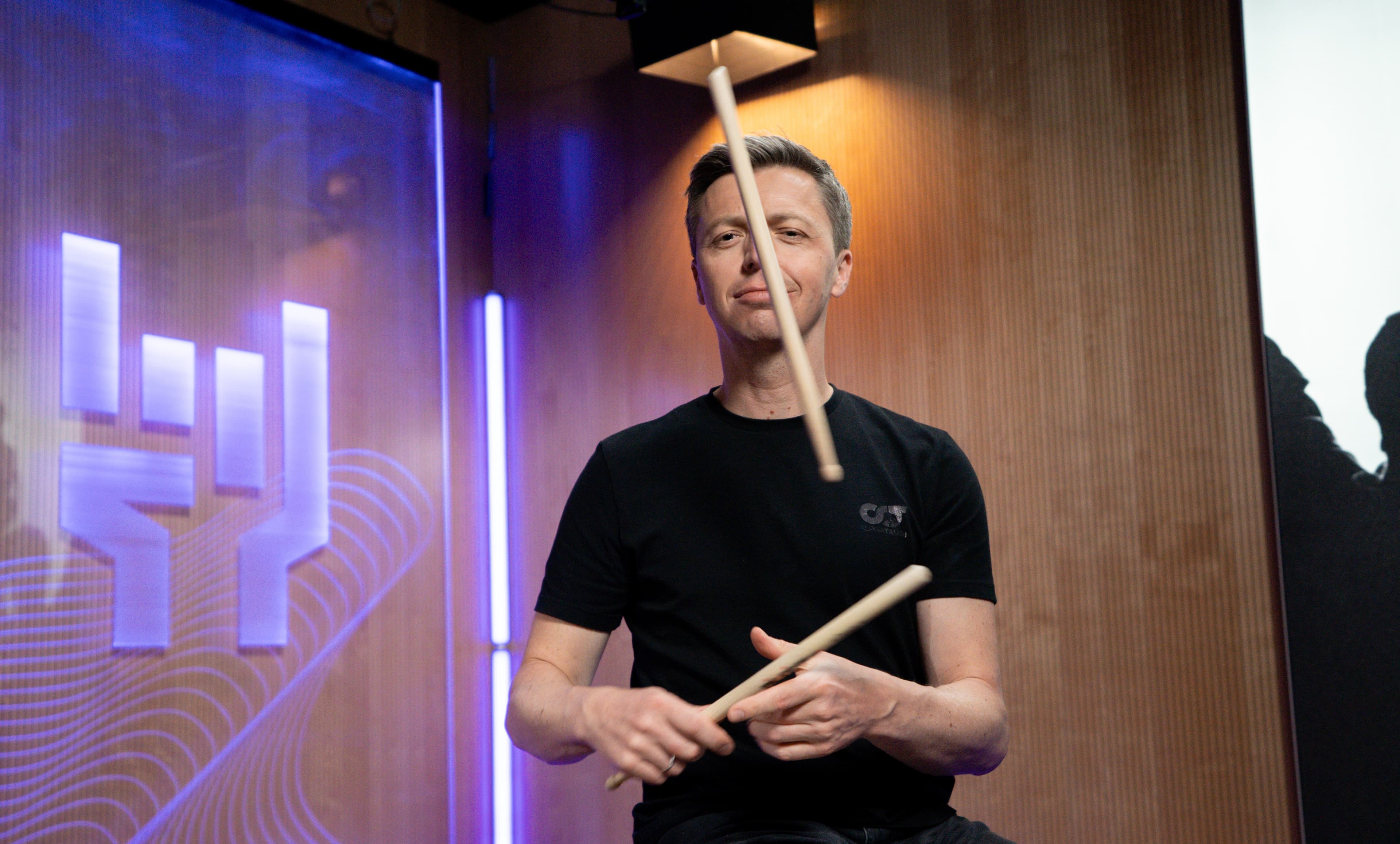
Drummers, do your homework!
For 30 years, I’ve been meeting drummers from all genres who display tremendous musicality and creativity. Fellow musicians who, inspired by their musical thoughts and feelings, have that special something.We’ve all seen it in concert halls, jazz clubs, stadiums or on stages large and small. The idea, the approach, the musical vision were brilliant. But something wasn’t quite right. It seemed static, tense and lacking in confidence. It was missing – yes, that’s exactly it – it was missing that sense of ease.
What exceptional drummers have in common
The great drummers – whether on the drum kit or in the field of percussion – have one thing in common: technical mastery!
What defines an exceptional player? First and foremost – and this certainly comes before anything else – a complete mastery of their craft. Drumming legend Thomas Lang calls it the musical ‘vocabulary’. In other words, being able to implement and incorporate everything at every moment of their playing. So, in order to play creatively, completely free from any musical constraints or restrictions, you have to do your technical homework.
Master the basic techniques
To start with, there’s an important rule:
Practise with concentration, focus and an eye for detail. It’s not the player with the most extensive practice routine who will be among the best, but those who can focus and concentrate on the task at hand to the utmost. Efficient practice is key!
If you combine diligence with efficient, focused practice, you’re well on your way! Then you need to know what matters.
First, the very clear and easily defined basics:
- Wrist Strokes
- Finger Strokes
- Double Strokes
- Up & Down Strokes
- Paradiddles in all shapes and forms
- Combinations
You can find a few examples of this here or in our extensive courses within the MyGroove App.
Next comes translating this musical ‘catalogue’ onto the instrument. Naturally, this works quite differently on the drum kit than on the marimba, vibraphone, timpani or set-up instruments. And yet the basic rules of playing remain the same.
A double stroke will not phrase well or sound tasteful in any drum solo, in any ghost note, or in any pattern, however sophisticated, unless the so-called ‘snap movement’ between the wrist and the finger has been sufficiently studied and practised.
Set-up pieces from the classical repertoire will always sound half-finished if the balanced combination of wrist, finger, double and up & strokes is not sufficiently worked out, both individually and in combination.
No matter how hard the performer tries, it will not have the brilliance and class one desires if the basics are missing.
How to practice technique correctly
The question remains: how does one practise this optimally?
Well, there are various possibilities, yet in the end it is a solitary, straightforward path that must be taken once in a drummer’s life. And that is the months-long, perhaps even years-long engagement with the basic techniques.
You can practise these on a practice pad, on real drums, on a pillow, on a cymbal, on a park bench, on your own thigh or even on a school desk. Because every playing surface has its own challenges and pitfalls.
Literature, Apps and Tutorials: learn the drums digitally
Once you’ve decided to learn the basics of drumming, it’s all about structure and technique. The first question is where to find the information for this. Well, there is some excellent literature available, both in print and digital formats.
Let’s start with the classics:
- Stick Control by G.L. Stone
- The Drummers Rudimental Reference Book by J. Wooton
- Rudimental Cookbooks by Ed Freytag
However, there are also – and these forms of practice offer various advantages – digital training options. These include the popular drum schools from Drumeo or Rhythm-Bot.
The frontrunner among digital learning methods at present, however, is likely to be the Technique Deep-Dive in the MyGroove App. There, a wide variety of techniques are covered in over 4,000 exercises of all difficulty levels.
Drum technique practice: exercises and routine
How do I build up my technique in a sensible and efficient way? Well, ultimately it’s like strength training in sport. You define the various techniques, get hold of the perfect teaching material – whether in print or digital form – and then you need a training plan. This daily training plan could look something like this, for example:
Example of a Training Plan:
Wrist Strokes
60 minutes of wrist strokes (right hand, left hand, flat flams and alternating) in various time signatures (whole notes, half notes, quarter notes, etc.). These must always be performed perfectly at a very slow tempo. In other words: it is not the tempo that is crucial, but the correct execution of the exercise itself.
Finger Strokes
60 minutes of finger strokes (right hand, left hand, flat flams and alternating). When practising this technique, it’s important to commit to a particular finger stroke technique right from the start. This is because there are many different approaches to this technique.
These include the short movement from a flat hand or the chop position from a sort of ‘karate’ stance. Finger strokes are usually played at very slow tempos, especially at the beginning. This is because the challenge of finding the ‘sweet spot’ of the stick and truly gaining control of it is greatest at this stage.
Up & Down Strokes
60 minutes of up & down strokes. This technique is probably the most commonly used, as it offers a very wide range of possibilities. This technique enables all those great phrasings and silky-smooth transitions in patterns and solos. It is important to practise this first in a very slow, almost sterile movement. Every centimetre of the movement must be utilised and analysed precisely at the start.
You can do this yourself in front of a mirror or record your movement and then observe it in the video analysis. Some tools (such as the MyGroove app) also offer an analysis tool. This allows you to compare your own movement with the coach’s and thus implement the differences and possible improvements in real time.
Double Strokes
60 minutes of double strokes. Part of this movement is the so-called ‘snap move’. That is, spreading the fingers and the associated rapid movement back to the basic position. A powerful double stroke ‘solves’ many problems that drummers have to deal with. It saves energy, increases efficiency and can be used in thousands of variations. If you execute the double stroke with the correct technique, you can play certain passages for hours with brilliance and clarity.
Tips for practicing technique
It is important to always set yourself goals and milestones. 4 weeks to achieve a cleanly executed wrist stroke at a slow tempo. Or 12 weeks to start combining exercises from a wide variety of techniques. Most schools (I’ve listed digital and analogue options above) are very well structured for this.
Finally, three last important tips
- ALWAYS practise with the metronome and use short units. So-called subdivisions!
- Try to tap your feet in time with the beat as often as possible. This increases the efficiency of your training and improves your timing.
- Practise each exercise with alternating lead hands. Don’t always start with your right hand. Always do the same exercise starting with your left hand as well. This improves your ambidexterity and trains your synapses.
FAQ
How important are technical fundamentals for drummers?
Technical fundamentals form the foundation for musical freedom. Those who have mastered control over their movements can bring musical ideas to life more easily and sound more confident.
How long does it take to develop good drumming technique?
That depends on the amount of practice, concentration, and instruction. Initial improvements are often visible after just a few weeks. However, developing a truly mature technique is a process that takes several years.
Should I practice longer or more efficiently?
Efficient practice is more important than the sheer duration of practice. Short, highly focused practice sessions often yield more progress than many hours of unstructured playing.
Do I always have to practice with a metronome?
The metronome is an indispensable tool for developing technique. It improves timing, control, and precision and should be used regularly.
Can I practice technique without a drum set?
Yes. Many fundamentals can be practiced on a practice pad, a pillow, or even on your thigh. What matters is the quality of the movement, not the instrument itself.
It's time to take your drumming to the next level!
Sign up and try it free for 7 days — your groove is waiting 🎶
Start now for freeAbout the author
.jpg&w=256&q=75)
Martin Grubinger
Musician & MyGroove Founder
Technical perfection, pure precision and absolute musical joy is what makes him stand out for those who know Martin Grubinger as the world's best multi-percussionist. His unique stage career, as well as his profession at Mozarteum University Salzburg, training the best future talent go along to prove this. These days, Martin is increasingly focused on digital music education and developed the MyGroove App, to transport excitement and motivation for instrument learning into everyone's daily life.